


Most service business owners believe they can copy-paste the same SEO tactics that work for e-commerce stores and expect identical results. This misconception costs thousands of dollars in wasted marketing spend every year. Service industries require fundamentally different SEO approaches because you’re selling expertise and trust, not physical products. This guide reveals the specialized strategies that actually work for service businesses in 2026, helping you attract more qualified clients through search.
Key takeaways
| Point | Details |
|---|---|
| Service SEO differs fundamentally | Intangible offerings demand trust-building tactics rather than product optimization approaches. |
| Local optimization drives results | Google Business Profile management and localized keywords generate more qualified leads than broad national campaigns. |
| Client intent varies significantly | Service searchers evaluate credentials and reviews differently than product shoppers, requiring tailored content. |
| Conversion metrics matter most | Track consultation requests and calls instead of just traffic to measure true ROI. |
| Technical foundations impact trust | Site speed and mobile experience directly influence whether potential clients view you as credible. |
Why SEO for service industries is different
Service businesses face unique challenges compared to e-commerce because you’re marketing intangible expertise rather than physical products. Potential clients can’t add your consulting services to a shopping cart or browse through product photos. They’re evaluating your credibility, reputation, and ability to solve their specific problem.

Local SEO becomes exponentially more important for service providers because most clients prefer working with nearby businesses they can meet face-to-face. A plumber in Denver doesn’t benefit from ranking nationally, only within their service area. Your SEO strategy must prioritize geographic relevance over broad keyword rankings.
Search intent varies dramatically in service industries. Someone searching for a divorce attorney isn’t casually browsing, they’re experiencing a crisis and need immediate help. Understanding these emotional contexts shapes everything from keyword selection to page design.
Conversion elements differ entirely from product-based businesses. You’re optimizing for:
- Consultation booking forms that reduce friction
- Click-to-call buttons prominently displayed
- Testimonials that build immediate trust
- Service area pages that target local searchers
- Educational content demonstrating expertise
Content marketing plays a bigger role because you must prove competence before clients ever contact you. Detailed service explanations, case studies, and FAQ pages replace product specifications and shipping information. This fundamental difference means traditional e-commerce SEO playbooks fail spectacularly for service providers.
Core SEO strategies tailored for service businesses
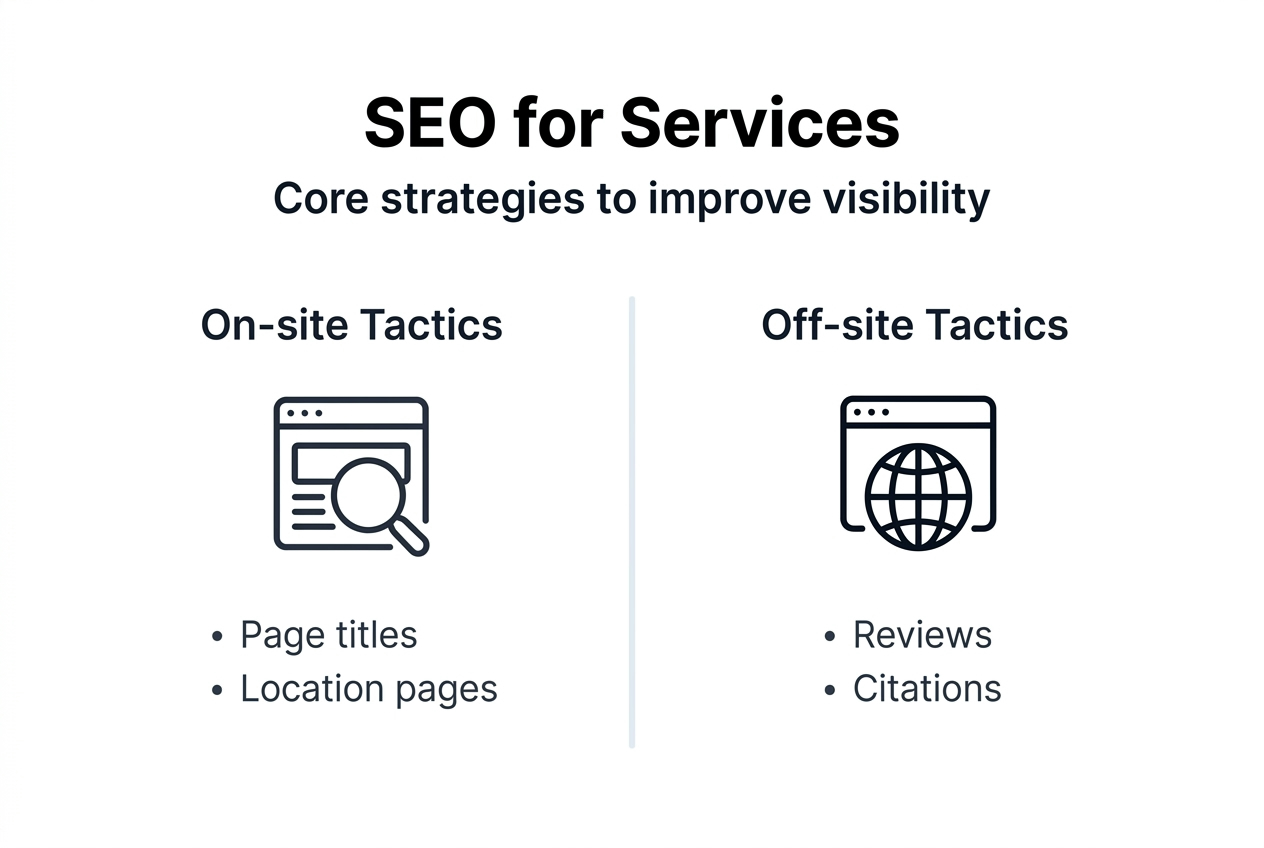
Start with comprehensive service page optimization that clearly communicates what you do and who you help. Each service page needs a descriptive title tag including your location and service type, like “Emergency HVAC Repair in Phoenix.” Write benefit-focused descriptions that answer the question “Why should I choose you?” rather than just listing features.
Claiming your Google Business Profile remains the single most impactful action for local service businesses. Complete every section including business hours, service areas, attributes, and high-quality photos. Post weekly updates about projects, tips, or seasonal offers to signal active management. Respond to every review within 24 hours to demonstrate excellent customer service.
Review acquisition and management deserves dedicated effort because search algorithms heavily weight customer feedback signals. Implement a systematic process:
- Ask satisfied clients for reviews immediately after project completion
- Send follow-up emails with direct Google review links
- Display reviews prominently on your website
- Address negative reviews professionally and offer solutions
- Track review velocity as a key performance indicator
Content creation should focus relentlessly on answering client questions before they ask them. Build topic clusters around common pain points your target clients experience. A financial advisor might create comprehensive guides on retirement planning, tax strategies, and estate management. Each piece demonstrates expertise while naturally incorporating relevant keywords.
Technical SEO improvements directly impact whether potential clients perceive you as professional and trustworthy. Slow-loading websites or mobile layouts that break communicate incompetence. Prioritize Core Web Vitals optimization, ensure mobile responsiveness, implement secure HTTPS protocols, and fix broken links quarterly. Consider investing in professional web design services if your current site undermines your expertise.
Pro Tip: Create dedicated landing pages for each geographic area you serve, even neighboring towns. A “Roofing Services in Arlington Heights” page performs better than hoping one generic page ranks everywhere. Include unique content with local landmarks and area-specific information to avoid duplicate content penalties.
Measuring SEO success for service industries
Looking at traffic numbers alone misleads service businesses because 10,000 visitors mean nothing if none become paying clients. Focus on conversion-oriented KPIs that directly tie to revenue. Track consultation form submissions, phone call volume from website visitors, and demo request completions as primary success metrics.
Keyword ranking monitoring should emphasize local service terms rather than broad industry keywords. Ranking first nationally for “accounting services” matters less than dominating “CPA for small business in Austin.” Use rank tracking tools that show position changes for location-specific searches within your target markets.
Google Business Profile insights reveal exactly how potential clients discover and interact with your listing. Monitor these weekly:
| Metric | What It Reveals | Action Threshold |
|---|---|---|
| Direct searches | Brand awareness growth | Track month-over-month trends |
| Discovery searches | How often you appear in category searches | Optimize if declining |
| Actions taken | Clicks to website, calls, direction requests | Low click-through suggests weak listing content |
| Photo views | Visual content engagement | Add new photos if views drop |
Bounce rate and time on site measurements indicate whether your content matches search intent. High bounce rates on service pages suggest misalignment between what you promised in search results and what the page delivers. Pages averaging under 30 seconds typically need content improvement or better targeting.
Review volume and average rating directly correlate with conversion rates. Businesses with 50+ reviews and 4.5+ star averages typically convert 3x better than those with sparse feedback. If review acquisition slows, implement stronger request systems or identify service quality issues causing hesitation.
Pro Tip: Set up conversion tracking in Google Analytics for every micro-conversion, not just final purchases. Track PDF downloads, video plays, chat initiations, and newsletter signups to understand the full customer journey before they contact you.
Common SEO pitfalls for service businesses and how to avoid them
Neglecting local optimization represents the costliest mistake service businesses make. Without proper local SEO foundations, you’re invisible to nearby clients actively searching for your services. Ensure your NAP (name, address, phone) remains consistent across all directories, claim citations on major platforms like Yelp and Yellow Pages, and embed Google Maps on your contact page.
Generic or duplicated content destroys search rankings because algorithms penalize lazy website management. Many service providers copy competitor descriptions or use template content across multiple service pages. Every page needs unique, valuable information that answers specific client questions. Invest time creating original case studies, detailed process explanations, and local market insights.
Ignoring customer review management creates compounding problems. Unanswered negative reviews signal poor customer service to both algorithms and potential clients. Review abandonment allows competitors to dominate the perception game. Even businesses providing excellent service lose clients to competitors with better-managed online reputations.
“Service businesses that fail to optimize for mobile users lose 60% of potential clients who abandon slow or broken mobile experiences. Your website must perform flawlessly on smartphones since most local searches happen on mobile devices.”
Failing to track performance metrics means you’re operating blind. Service business owners frequently invest in SEO without establishing baseline measurements or monitoring progress. You can’t improve what you don’t measure. Implement tracking systems before launching optimization efforts to demonstrate ROI and identify what works.
Additional pitfalls to avoid:
- Keyword stuffing service pages instead of writing naturally
- Building spammy backlinks from irrelevant directories
- Neglecting website security with outdated plugins or weak passwords
- Ignoring voice search optimization for conversational queries
- Failing to update content regularly, making your site appear abandoned
Discover expert SEO help tailored for your service industry
Implementing these strategies requires time, expertise, and consistent effort that most service business owners struggle to maintain while running their companies. Todd Stager specializes in building customized SEO systems for service industries that generate qualified leads without consuming your schedule.
Whether you need comprehensive web design optimization, specialized funeral home marketing, or financial services SEO strategies, Todd’s proven frameworks help service businesses dominate local search results. Get expert guidance tailored to your industry’s unique challenges and start attracting more qualified clients through search.
Frequently asked questions
What is the most important SEO factor for service industries?
Local search optimization combined with reputation management typically drives the most tangible results for service businesses. These two factors work together because appearing in local search results means nothing if poor reviews scare potential clients away. Focus on Google Business Profile optimization and systematic review acquisition before worrying about advanced technical SEO.
How can service businesses improve local SEO rankings?
Claim and fully optimize your Google Business Profile with complete information, high-quality photos, and regular posts. Actively collect positive customer reviews through systematic follow-up processes after every completed project. Incorporate localized keywords naturally throughout your website content, especially in service page titles and descriptions. Build citations on relevant local directories and ensure NAP consistency everywhere.
Should service businesses invest in content marketing for SEO?
Absolutely, because content that addresses specific client questions and pain points builds trust while improving search rankings. Educational blog posts, detailed service guides, and case studies demonstrate your expertise before potential clients ever contact you. This pre-qualification through content attracts higher-quality leads who understand your value proposition and arrive ready to hire.
How long does it take to see SEO results in service industries?
Most service businesses observe meaningful improvements within 3 to 6 months, though competitive markets may require longer investment. Initial changes like Google Business Profile optimization can generate leads within weeks. Broader organic ranking improvements for competitive keywords typically need sustained effort over several months. Track leading indicators like ranking improvements and traffic growth rather than waiting for final conversion numbers.